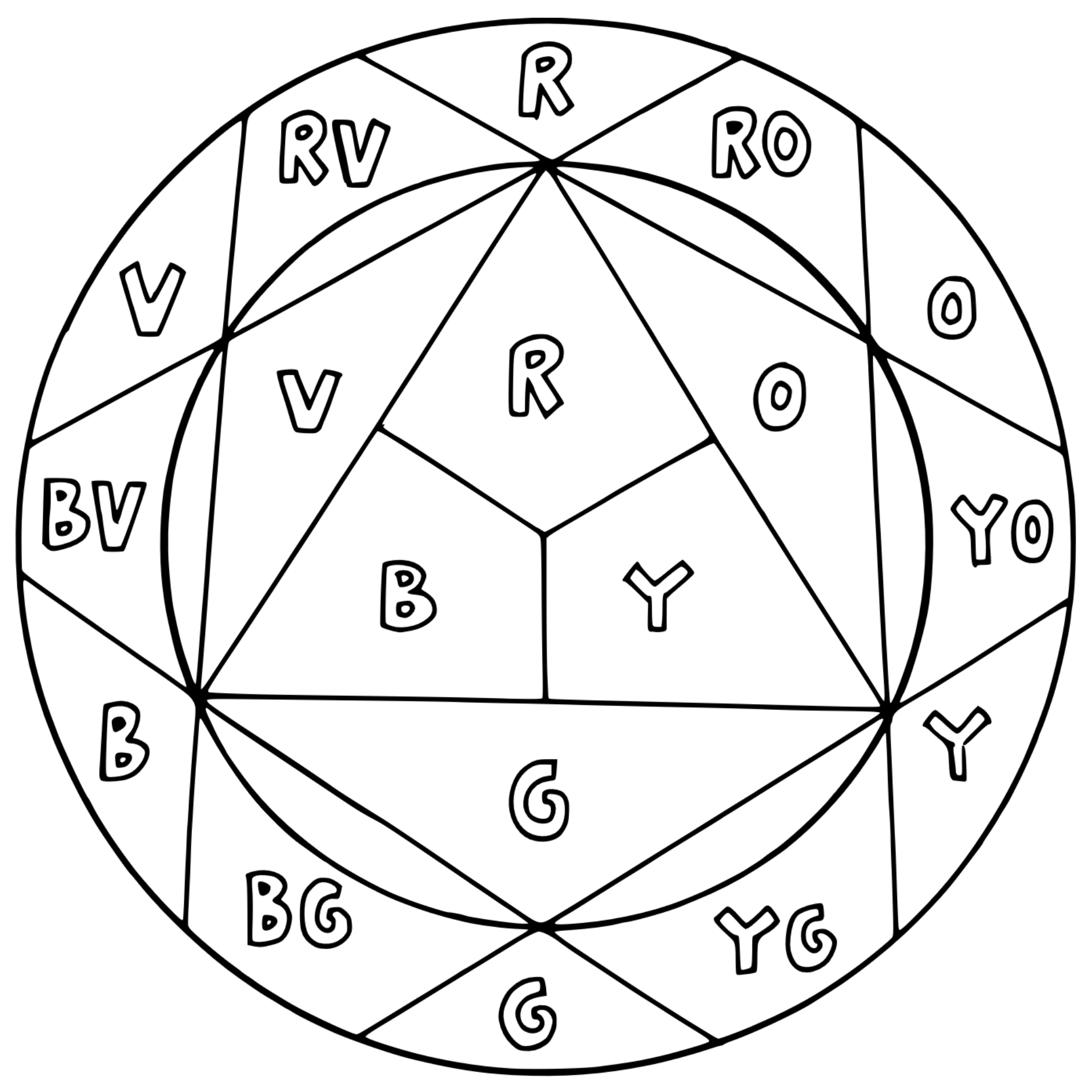
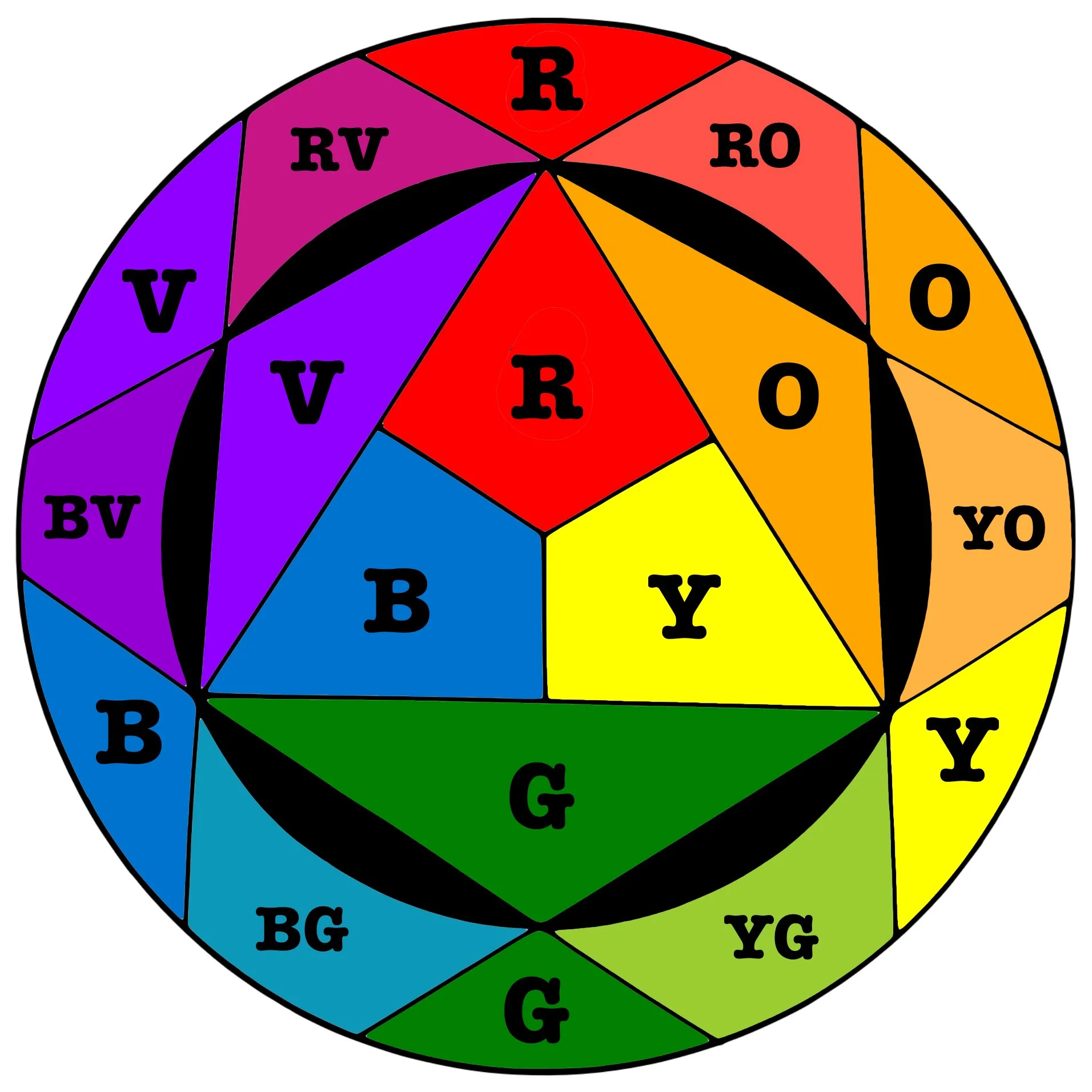
The color wheel is divided into warm and cool colors and illustrates important color relationships. Complementary colors, which create contrast, are positioned opposite one another on the wheel, while analogous colors, which create harmony, are located side by side. The color wheel also demonstrates how colors are mixed: the primary colors (red, yellow, and blue) combine to form the secondary colors (orange, green, and violet), while tertiary colors are created by mixing primary and secondary colors. Beyond its practical use in art and design, the color wheel can also support creativity, mindfulness, and self-care. Engaging with colors through drawing, painting, or coloring encourages focused attention and self-expression, providing a simple way to relax and unwind. Different colors may evoke different moods and emotions, making creative activities a meaningful tool for reflection, stress reduction, and cultivating a greater sense of balance and well-being.

COLOR WHEEL

A black and white lined illustrated color wheel and prism diagram representing primary, secondary, tertiary, complimentary and analogous colors.  There are letters to the corresponding colors for example RV is Red-Violet.

HAND-DRAWN BY SITA. DIGITALLY REFINED BY RAMAKHEPA.

A black and white lined illustrated color wheel and prism diagram representing primary, secondary, tertiary, complimentary and analogous colors.  There are letters to the corresponding colors for example RV is Red-Violet. Colored.

AI-COLORED DIGITAL ART