

This side view of the skull reveals the remarkable structure that protects and supports the brain, eyes, nose, mouth, and teeth. Though it appears to be a single solid form, it is composed of several interconnected bones that fit together with extraordinary precision. This design allows for growth and development early in life while providing strength and protection throughout adulthood. The body can be viewed as a temporary vessel—something that emerges, changes, and ultimately returns to nature. Reflecting on impermanence is not intended to be morbid, but rather to inspire clarity and appreciation for the present moment. The question “Who am I?”—central to the teachings of Ramana Maharshi—invites us to look beyond the changing body and passing thoughts toward the awareness that observes them. By contemplating both mortality and identity, we may begin to recognize the deeper presence within, often described as the witness.
SKULL BONES SIDE VIEW
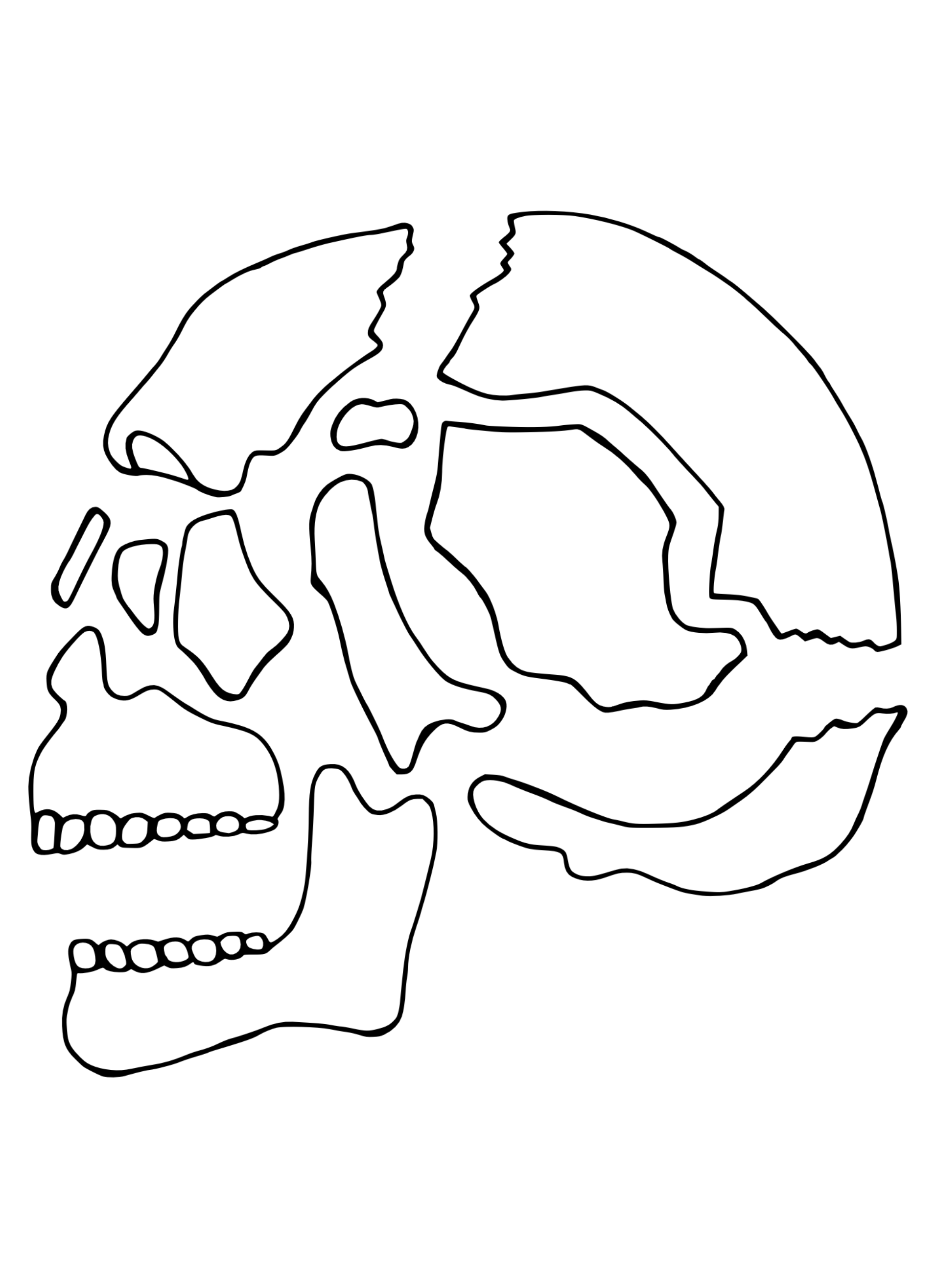
HAND-DRAWN BY SITA. DIGITALLY REFINED BY RAMAKHEPA.
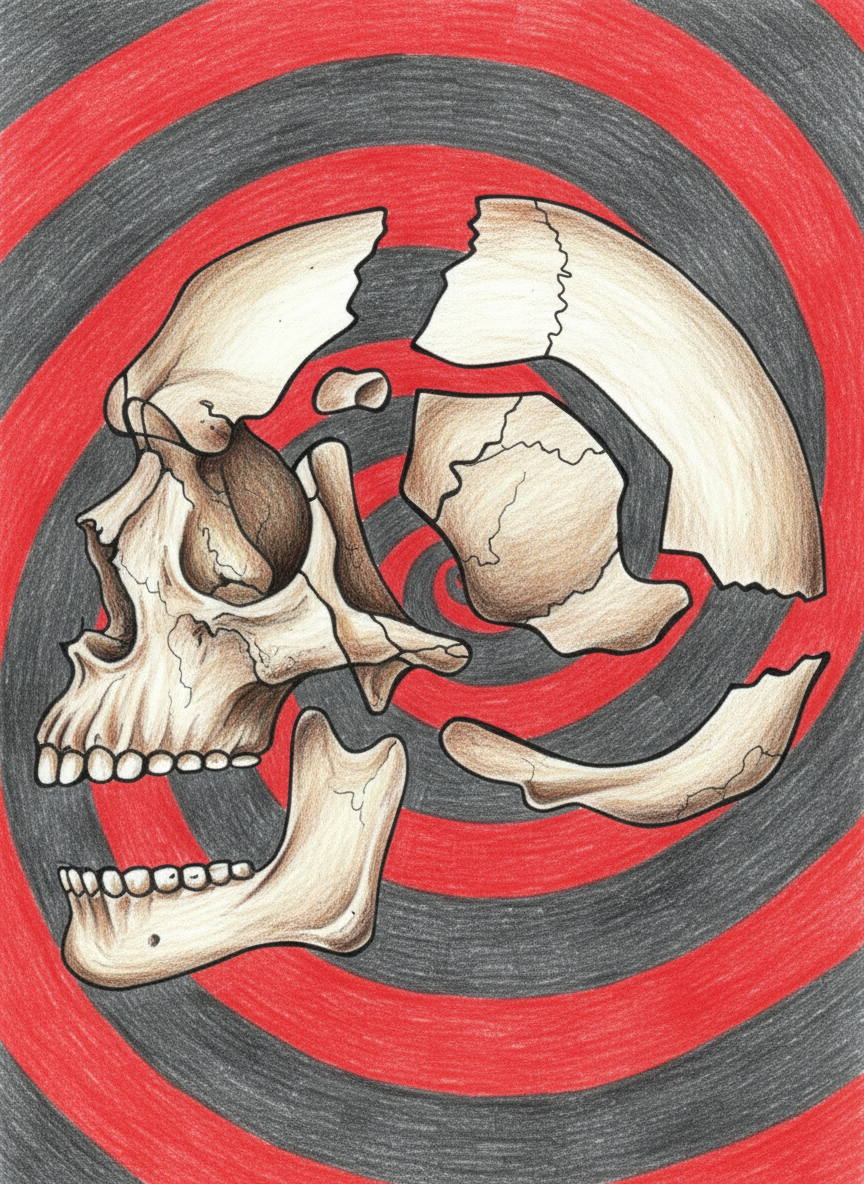
AI-COLORED DIGITAL ART
SKULL BONES
This illustration highlights the different bones that form the human skull. The skull is not a single bone but a collection of interconnected bones joined by fibrous sutures. Learning about the body's intricate structure can cultivate greater awareness, appreciation, and respect for the physical vessel through which we experience life. In this sense, the body can also be understood as a kind of living “spacesuit”—a finely tuned form that allows consciousness to move through the physical world, perceive it, and interact with it while remaining protected and supported by its intricate design.
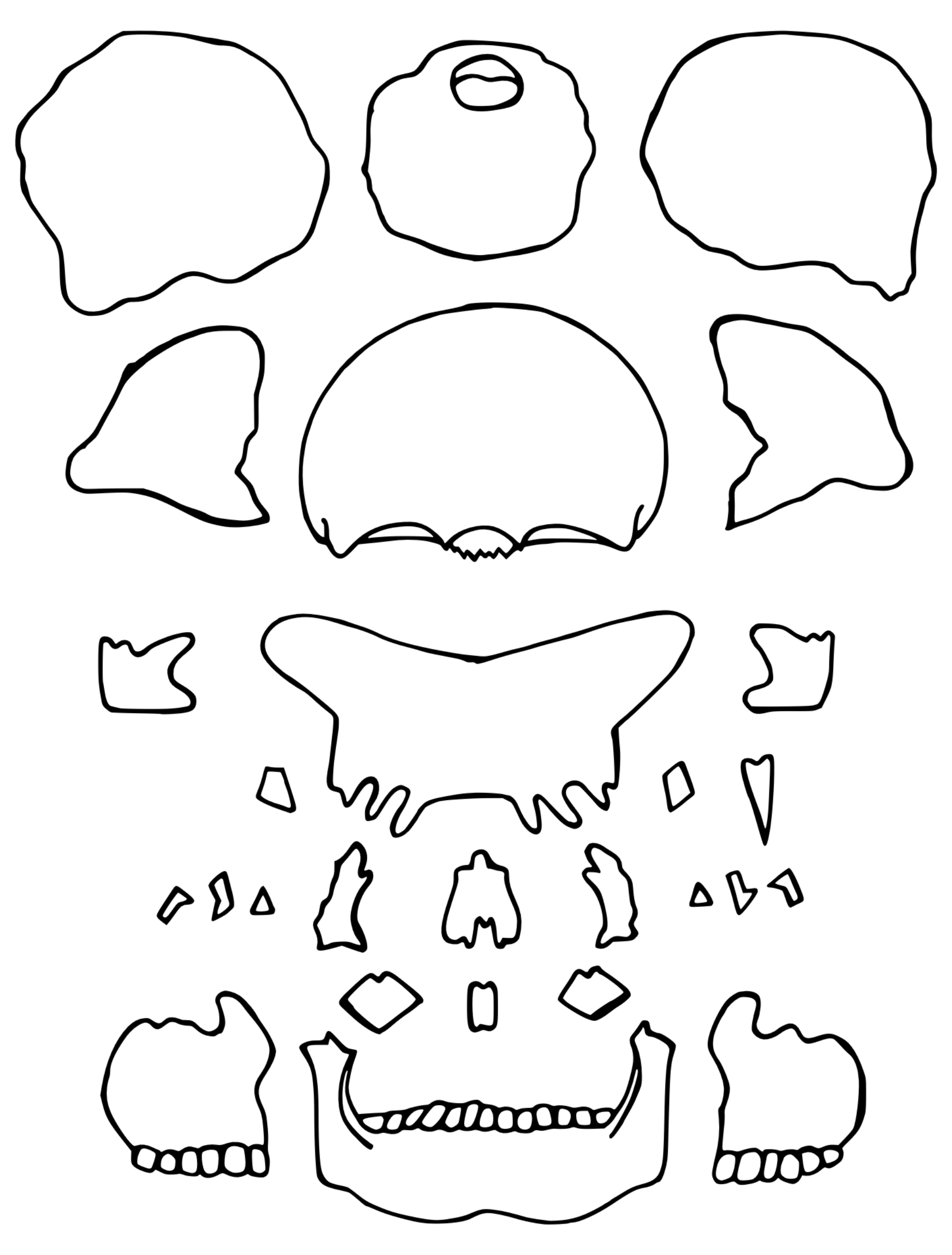
HAND-DRAWN BY SITA. DIGITALLY REFINED BY RAMAKHEPA.
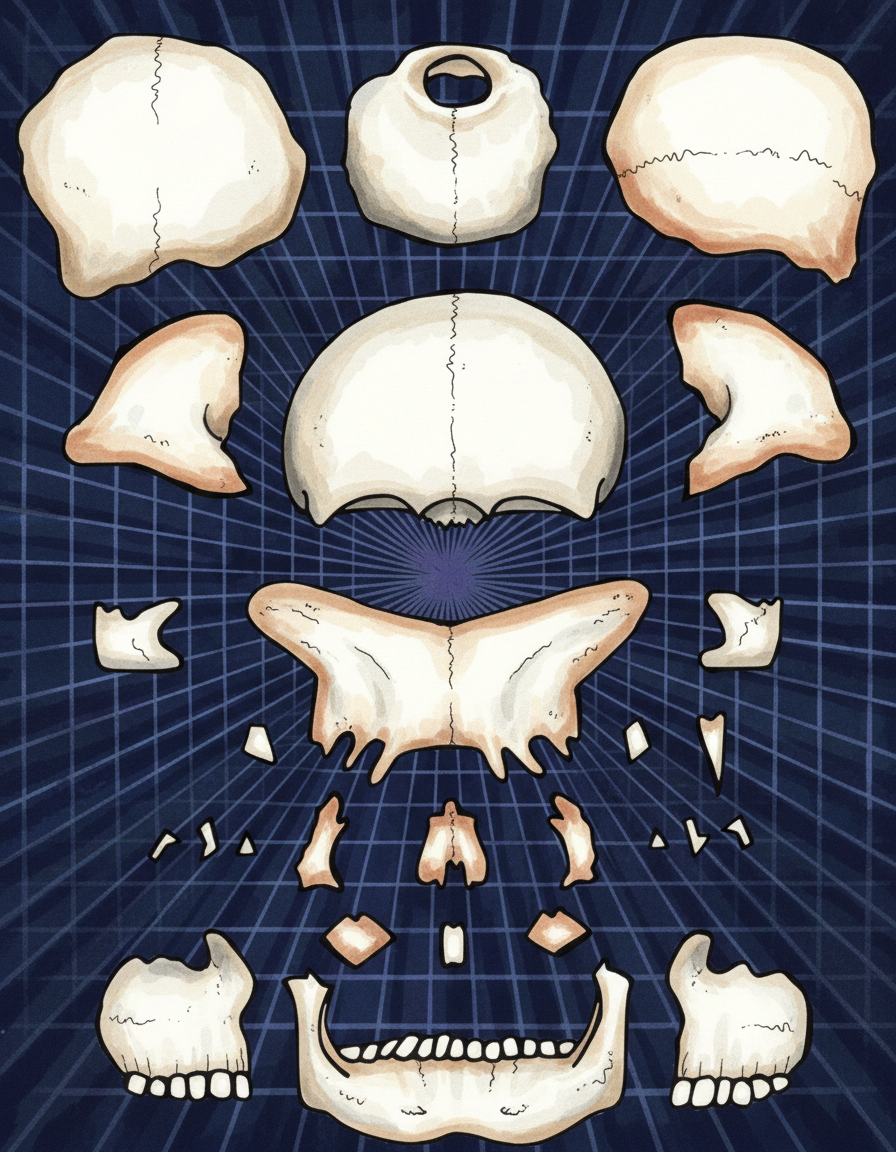
AI-COLORED DIGITAL ART
HAND BONES
The hands are essential to how we interact with the world and rely on a complex network of bones to provide structure and movement. Each of the four fingers contains three phalanges, while the thumb has only two phalanges, a design that enables its unique range of motion. Understanding how the body works increases physical awareness, helping us better protect and care for the form we inhabit. The hand is also seen as a tool of expression beyond the physical body, especially through mudras—symbolic hand gestures used in meditation, yoga, and devotional practice to direct energy, convey meaning, and cultivate inner awareness.
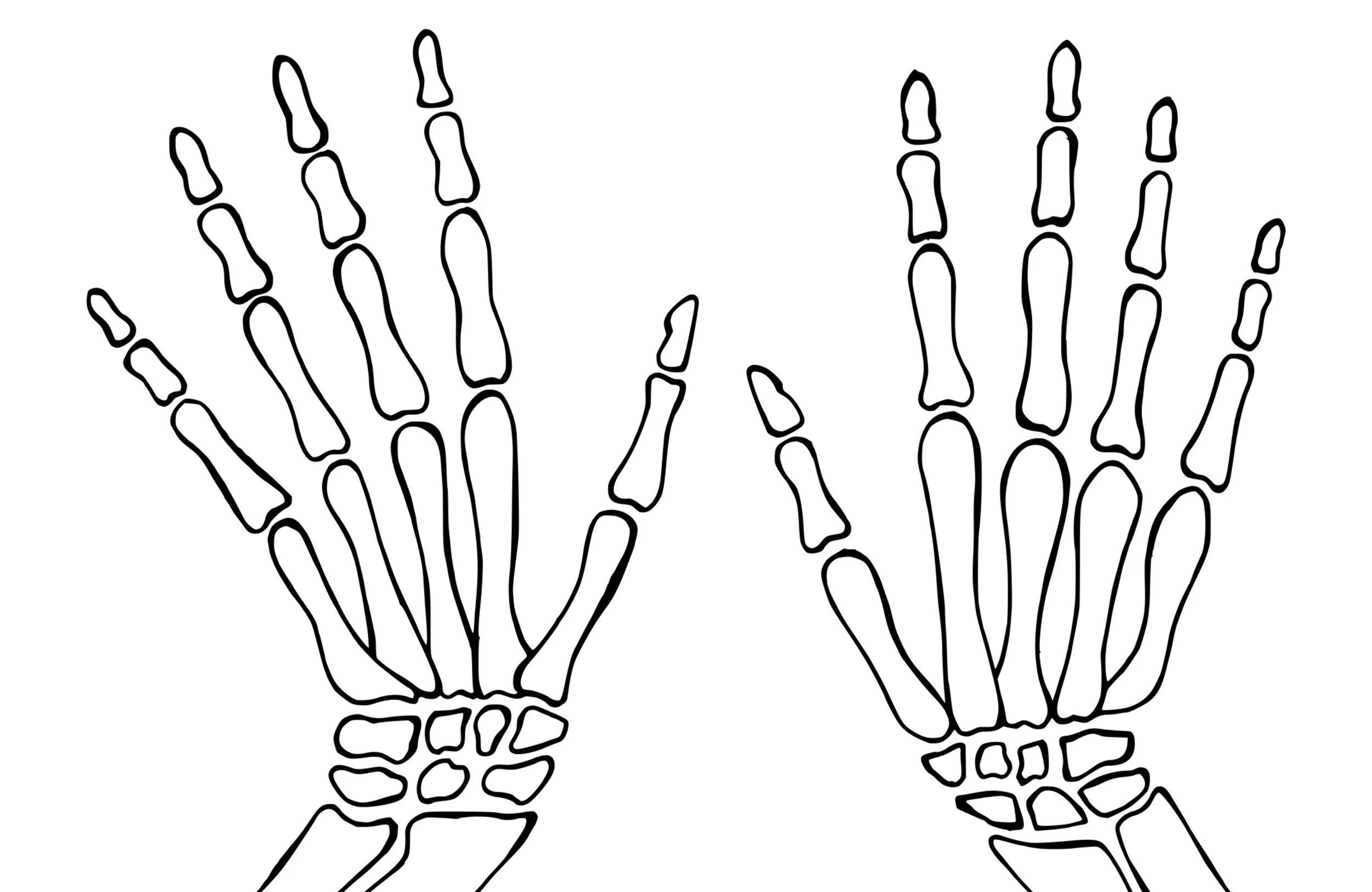
HAND-DRAWN BY SITA. DIGITALLY REFINED BY RAMAKHEPA.
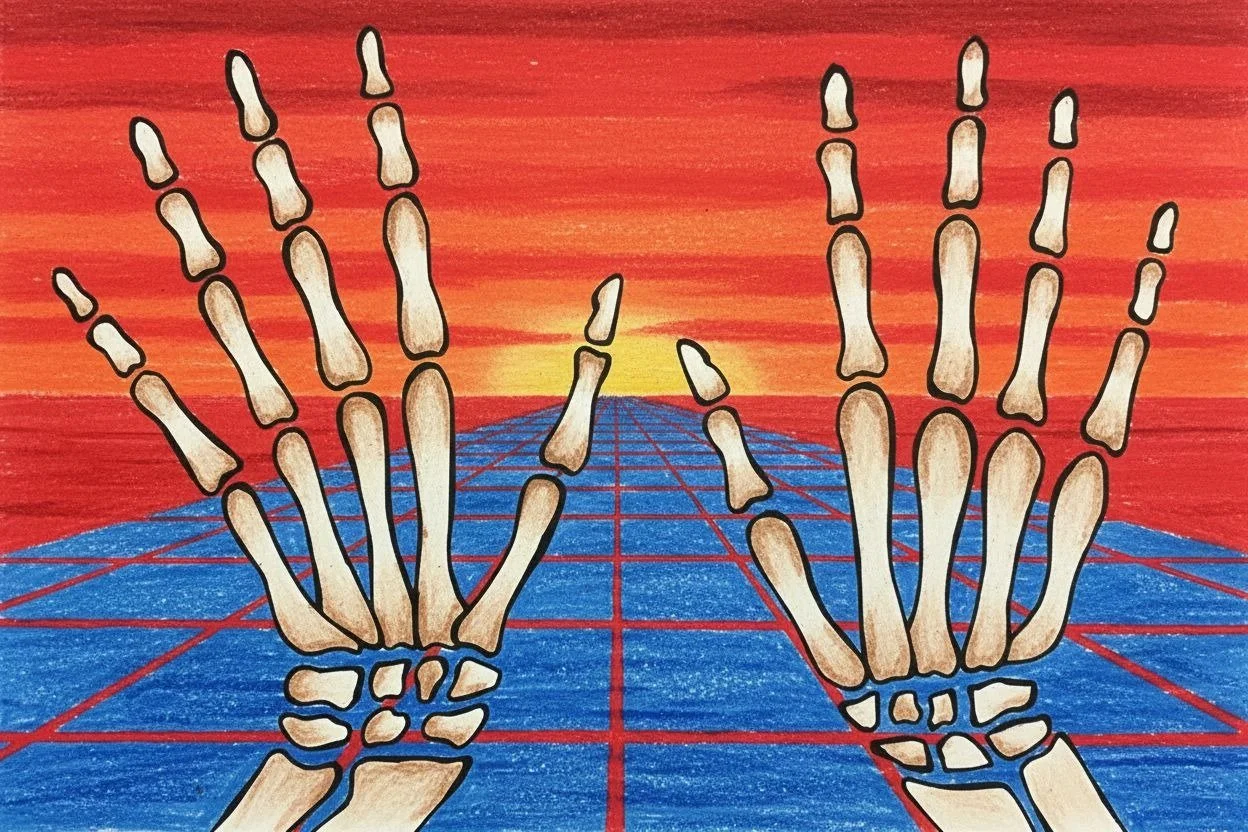
AI-COLORED DIGITAL ART